Missing teeth can impact both your confidence and your ability to chew and speak clearly. Fortunately, modern dentistry offers a variety of options for restoring your smile and function. If you’re considering tooth replacement solutions, you may have come across two common choices: partial dentures and dental bridges. Both of these options can help you regain your smile, but how do you know which is the right one for you?
At Young Dental Care in Aurora, we understand how important it is to make the best decision for your oral health. In this blog post, we’ll explore the differences between partial dentures and dental bridges, and provide insight into which might be best for your specific needs. Let’s dive in!
What Are Partial Dentures?
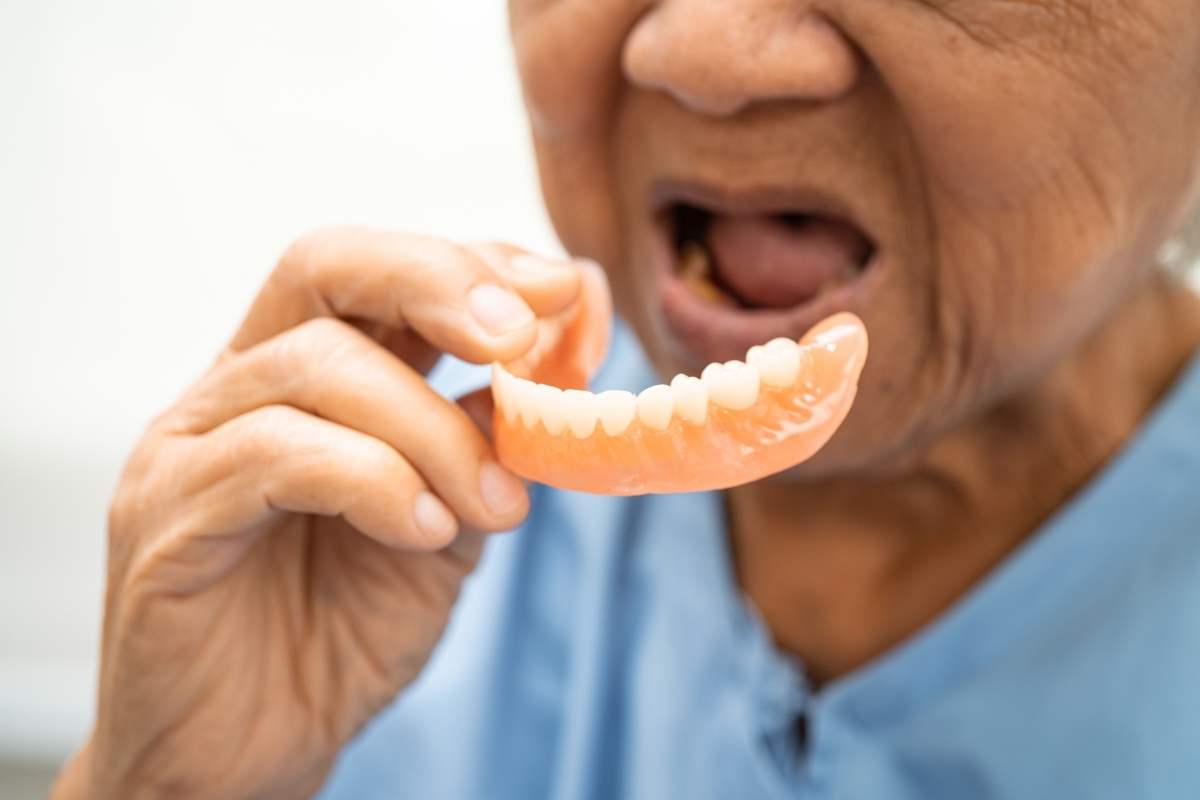
Partial dentures are removable dental appliances designed to replace one or more missing teeth. They consist of a plastic base that mimics your natural gum tissue, with metal clasps that hold the denture in place. Partial dentures are custom-made to fit the gaps in your mouth and can be easily removed for cleaning and maintenance.
Key Benefits of Partial Dentures:
- Restores both appearance and function: Partial dentures fill in gaps where teeth are missing, helping you chew, speak, and smile with confidence.
- Affordable: They are generally less expensive than dental bridges and implants.
- Non-invasive: Partial dentures don’t require any alterations to surrounding teeth.
- Easy to remove: This makes cleaning and maintenance easier.
What Are Dental Bridges?
Dental bridges are fixed appliances that replace one or more missing teeth by anchoring to the remaining natural teeth on either side of the gap. A bridge consists of two crowns placed on the adjacent teeth, and a false tooth (or teeth) in between. Unlike partial dentures, dental bridges are not removable—they are permanently attached to your natural teeth.
Key Benefits of Dental Bridges:
- Durable and long-lasting: Dental bridges are typically more durable than partial dentures, often lasting 10 to 15 years with proper care.
- Natural appearance: Bridges are crafted to match your natural teeth, blending seamlessly with your smile.
- No need for removal: Unlike partial dentures, you won’t need to take bridges out for cleaning or maintenance.
- Prevent shifting of surrounding teeth: By filling the gap, dental bridges help prevent other teeth from shifting out of place.
Partial Dentures vs. Dental Bridges: Which Is Right for You?
Choosing between partial dentures and dental bridges depends on various factors, including the number of missing teeth, the health of your surrounding teeth, and your personal preferences. Here’s a breakdown to help guide your decision:
When Should You Choose Partial Dentures?
- Multiple Missing Teeth: Partial dentures are ideal for replacing multiple missing teeth spread across different areas of your mouth.
- No Need for Tooth Alteration: If your surrounding teeth are healthy and you don’t want to file them down to support a bridge, partial dentures may be the better choice.
- Lower Budget: If cost is a concern, partial dentures are often the more affordable option compared to dental bridges.
- Want a Removable Option: If you prefer the flexibility of removing your dental appliance, partial dentures are the right choice.
When Should You Choose a Dental Bridge?
- Few Missing Teeth: If you’re missing one or two teeth in a row, a dental bridge is often the most effective solution.
- Strong Adjacent Teeth: Dental bridges work best when the adjacent teeth are healthy and strong enough to support the bridge.
- Permanent Solution: If you want a fixed, permanent option and don’t want to worry about taking your appliance out for cleaning, a bridge is the ideal choice.
- Long-Term Investment: While dental bridges can be more expensive than partial dentures, they offer greater durability and longevity.
The Procedure: What to Expect
Both partial dentures and dental bridges involve a process that may require multiple visits to the dentist. Here’s an overview of what you can expect for each procedure:
For Partial Dentures:
- Consultation and Impressions: Your dentist will assess your mouth and take impressions to create a custom partial denture that fits comfortably.
- Fitting: After your partial denture is created, you’ll return for a fitting to ensure it fits properly and comfortably.
- Adjustments: You may need follow-up visits for adjustments to ensure a perfect fit.
For Dental Bridges:
- Preparation of Adjacent Teeth: The teeth on either side of the gap will be prepared by removing some enamel so the crowns can fit over them.
- Impressions: Once the teeth are prepared, your dentist will take impressions of your mouth for a custom bridge.
- Temporary Bridge: While waiting for the permanent bridge to be made, you’ll wear a temporary bridge.
- Permanent Bridge Placement: After the permanent bridge is ready, you’ll return to have it placed and adjusted.
Ultimately, the decision between partial dentures and dental bridges depends on your specific needs and circumstances. Whether you choose partial dentures or a dental bridge, both options provide significant benefits in restoring your smile and oral function.
At Young Dental Care, we offer both partial dentures and dental bridges as part of our comprehensive dental care in Aurora. Our team will guide you through the process, helping you make an informed decision about which solution is best for you. Schedule an appointment with us today and take the first step towards restoring your smile!
FAQs
Q1: How long do partial dentures last?
Partial dentures typically last 5 to 7 years with proper care. However, they may need to be adjusted or replaced as your mouth changes over time.
Q2: Are dental bridges a permanent solution?
Yes, dental bridges are considered a permanent solution as they are fixed in place. With proper care, they can last 10 to 15 years or longer.
Q3: Are partial dentures uncomfortable?
While partial dentures may feel strange at first, most people adapt to them over time. Your dentist will work to ensure a comfortable fit.
Q4: Can I eat normally with a dental bridge?
Yes, once your dental bridge is placed, you can eat and speak normally. It’s important to avoid hard or sticky foods that could damage the bridge.
Q5: How do I clean partial dentures?
Partial dentures are easy to clean. Simply remove them and brush with a special denture brush or a soft toothbrush. Be sure to rinse them thoroughly before reinserting.