Pay Online

Most people notice gum swelling and assume it’ll pass. Maybe you brushed a little too aggressively, or something sharp irritated the tissue. That’s a fair assumption and sometimes it’s correct. But sudden, unexplained gum swelling that appears quickly or keeps getting worse is a different story. It can signal a serious dental infection, and waiting it out is rarely the right move.
This is especially true for residents in Aurora and the surrounding area. Dental emergencies don’t follow convenient schedules. Knowing when swollen gums cross the line from “keep an eye on it” to “call the dentist now” is one of the most practical things you can do for your health. If you’re already concerned, reaching out to an emergency dentist in Aurora at Young Dental Care is a simple first step.
Let’s look at what causes this kind of swelling, what the warning signs mean, and when it genuinely becomes an emergency.
What’s Causing Your Gums to Swell?
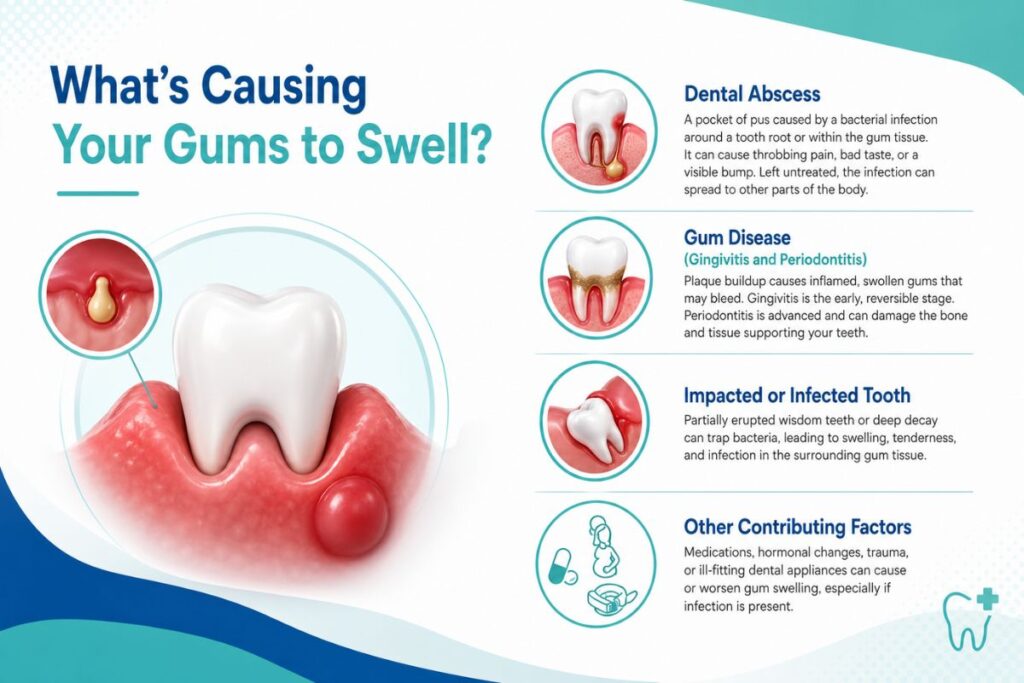
Gum tissue doesn’t swell without a reason. The swelling you see is your body’s inflammatory response – a signal that something is irritating or infecting the area. The cause determines how urgently you need care.
Dental Abscess
A dental abscess is one of the most serious culprits. It’s a pocket of pus that forms around a tooth root or within the gum tissue due to a bacterial infection. You’ll often notice a throbbing, persistent pain alongside the swelling – sometimes accompanied by a bad taste in your mouth or a visible bump on the gumline.
Left untreated, an abscess doesn’t stay contained. The infection can spread to the jaw, neck, or even the bloodstream. Around 200,000 Americans visit dental emergency rooms each year for abscesses or severe dental infections, according to published data, accounting for roughly 25% of all oral health-related ER visits.
Gum Disease (Gingivitis and Periodontitis)
Nearly 42% of U.S. adults aged 30 and older have periodontitis, according to the CDC. Many of them don’t know it yet. Gum disease starts quietly – plaque builds up along the gumline, tissue becomes inflamed, and bleeding during brushing becomes routine. Over time, that inflammation becomes harder to reverse.
Gingivitis is the early, reversible stage. Periodontitis is the advanced stage that involves bone and tissue destruction around the teeth. Both produce swollen gums, but periodontitis carries much higher stakes. If swelling around multiple teeth is worsening progressively, gum disease is a likely explanation.
Impacted or Infected Tooth
Wisdom teeth that haven’t fully erupted create pockets where bacteria accumulate easily. This leads to localized swelling, tenderness, and sometimes significant pain in the back of the jaw. A deeply decayed tooth can also allow bacteria to reach the pulp, triggering an infection that makes the surrounding gum tissue swell as the body tries to contain it.
Other Contributing Factors
Some medications can cause gum overgrowth as a side effect. Hormonal changes during pregnancy are known to increase gum sensitivity and lead to inflammation. Trauma from a sports injury, accidental bite, or ill-fitting dental appliance can also cause localized swelling that, if accompanied by signs of infection, still warrants professional attention.
Signs That Make It a Dental Emergency
Not every instance of gum swelling requires an urgent visit. Minor irritation from aggressive brushing or a food particle lodged near the gum typically resolves within a day or two with good hygiene. These situations are different.
Seek care the same day if you notice:
- Rapid or spreading swelling – if it extends toward your jaw, cheek, or neck
- Fever alongside gum swelling – this combination almost always points to active infection
- Throbbing pain that doesn’t ease – especially if it wakes you at night or radiates to your ear or jaw
- Pus draining from the gum or a persistent foul taste that brushing doesn’t clear
- Difficulty swallowing, chewing, or fully opening your mouth – these are signs the infection may be spreading beyond the oral cavity
- Swelling localized to one specific area rather than general redness throughout the mouth
Any single one of these, especially combined with others, means you should not wait for a routine appointment.
Why Delaying Care Makes Things Worse
Dental infections are not self-limiting. Unlike a minor cut that the body can manage on its own, an untreated oral abscess has a pathway to spread – through nearby tissue, into the jawbone, and in serious cases, into the bloodstream. Once an infection becomes systemic, it’s no longer a dental problem. It becomes a medical one.
Research estimates that 1 in 2,600 people in the U.S. will be hospitalized because of a dental infection. Most of those hospitalizations are preventable with timely treatment. The longer a dental abscess or advanced gum infection goes unaddressed, the more tissue and bone are at risk and the more complex the treatment becomes.
A drainage procedure, a course of antibiotics, or a root canal performed promptly can stop an infection in its tracks. The same problem addressed weeks later might require tooth extraction or surgical intervention.
What to Do Before You Can Be Seen
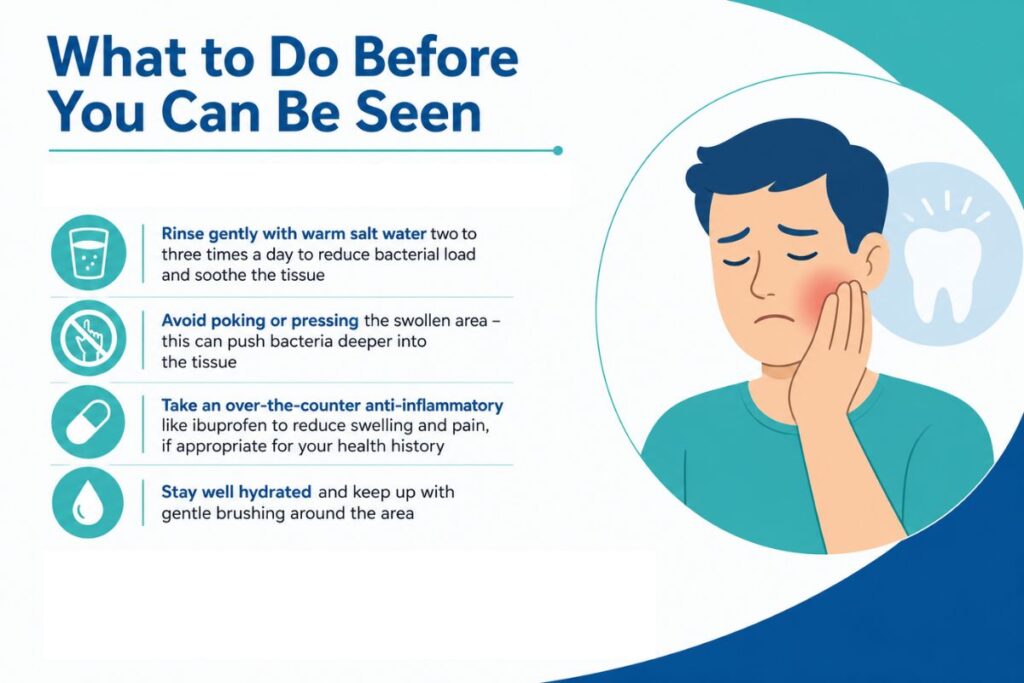
If you’re waiting on an appointment, a few measures can help manage discomfort in the meantime:
- Rinse gently with warm salt water two to three times a day to reduce bacterial load and soothe the tissue
- Avoid poking or pressing the swollen area – this can push bacteria deeper into the tissue
- Take an over-the-counter anti-inflammatory like ibuprofen to reduce swelling and pain, if appropriate for your health history
- Stay well hydrated and keep up with gentle brushing around the area
These are supportive steps only. They don’t treat the underlying cause. If symptoms worsen at any point, especially fever, spreading swelling, or difficulty breathing or swallowing, go to an emergency room immediately.
Getting Seen in Aurora
Young Dental Care in Aurora understands that gum swelling rarely gives you advance notice. The team at Young Dental Care treats emergency dental situations with the urgency they deserve – evaluating the cause, relieving pain, and developing a treatment plan before an infection can escalate.
Aurora is a large and growing community in the Chicago metro area, and access to timely dental care matters here as much as anywhere. Whether you’re a longtime resident or new to the area, having a dental practice you can call in an emergency is genuinely valuable. A cosmetic dentist in El Segundo can help with smile concerns, but for the residents of Aurora dealing with sudden gum swelling, the right call is to an emergency dentist in Aurora who can assess, diagnose, and treat the problem quickly.
Your body is usually pretty clear when something needs attention. Sudden gum swelling, especially with pain, fever, or visible signs of infection, is one of those moments. The problem won’t resolve itself, and waiting tends to raise the stakes.
Call Young Dental Care today to schedule an emergency evaluation. The sooner the cause is identified, the sooner you can get back to feeling like yourself.
People Also Ask
Q.1 Can gum swelling spread to other parts of the face?
Yes. If a dental abscess or severe infection goes untreated, it can spread into the jaw, cheek, or neck. This progression is a serious medical concern that may require hospitalization. Prompt dental treatment significantly reduces this risk.
Q.2 Does gum swelling always mean I have gum disease?
Not necessarily. Swelling can also result from an abscessed tooth, a food particle lodged under the gumline, trauma, medications, or hormonal changes. A dentist can identify the actual cause through a clinical exam and X-rays.
Q.3 What’s the difference between gingivitis and periodontitis?
Gingivitis is early-stage gum inflammation that’s reversible with proper hygiene and professional cleaning. Periodontitis is an advanced form of gum disease that damages the bone and connective tissue supporting your teeth. Once periodontitis progresses, the structural damage cannot be fully reversed.
Q.4 Can stress cause my gums to swell up suddenly?
Stress doesn’t directly inflame the gums, but it can suppress the immune system, reducing the body’s ability to fight off oral bacteria. This increases susceptibility to gum infections and can accelerate existing inflammation, making it more noticeable.
Q.5 Is rinsing with salt water enough to treat swollen gums at home?
Salt water rinses reduce surface bacteria and temporarily soothe inflamed tissue, but they cannot treat an underlying infection, abscess, or advanced gum disease. They’re a reasonable short-term measure.